Most eyewear walls look the same. Rows of black acetate and thin metal are safe, familiar, and easy to forget. Statement frames made with wood and horn break that pattern in a second: a customer can spot the grain, feel the difference, and remember your shop because of one pair.
This article is about bold, natural-material design — wooden temples, genuine buffalo horn, horn-effect patterns, and exaggerated shapes — why they sell, how to tell materials apart honestly, and what to check before you order.
Why natural-material statement frames sell
Natural materials carry a story standard frames cannot copy. Their colour and grain grew over time, so every piece has its own lines, tones, and small variations. Customers feel that difference as soon as they hold a pair.
Uniqueness also moves the conversation away from direct comparison and towards fit, feel, and character. For a small brand, even a short capsule of natural-material frames can define a collection’s identity.
Craft is the third reason. Polishing wood, shaping horn, and joining natural parts to a front takes handwork and patience. Show that process in photos and shelf cards, and the frame becomes something made, not just manufactured.
Wooden temples: warmth you can see and feel
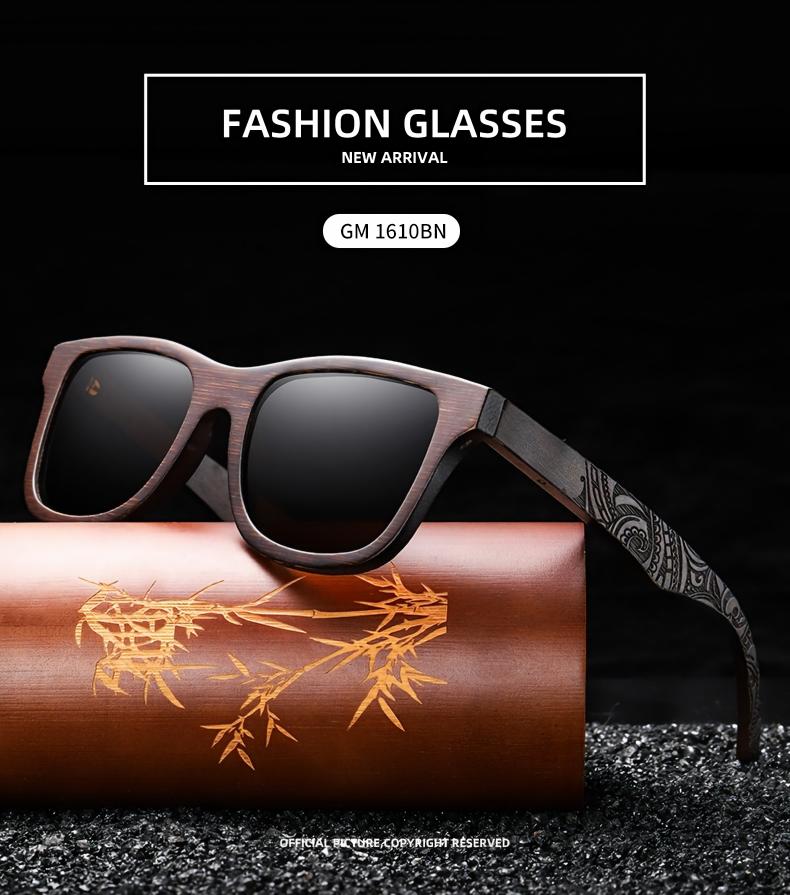
The most practical way into this category is a hybrid frame: an acetate or metal front, with temples made of real wood. The front keeps a familiar fit, while the side view — the view other people see most — shows natural grain.
Different woods give different moods. Bamboo looks light, clean, and fresh. Walnut brings a rich, warm brown. Ebony is dark and calm, close to black but softer. Zebrawood has strong stripes that make even a simple shape look bold.
Because grain varies, wooden temples photograph beautifully. Tell customers that variation is a feature of a natural material, not a defect — set that expectation before the sale.
Wood also feels warm to the touch compared with metal, and smooth against the skin when well finished. Finish quality is everything, so the sourcing checks below matter.
Buffalo horn — and horn-effect: know which one you are buying
Buffalo horn is a traditional luxury eyewear material. Skilled makers cut, shape, and polish horn plates by hand. The finished frame shows natural grain in shades such as cream, honey, brown, and black, blended in ways no printed pattern fully repeats. It feels light for its size, warm on the skin, and smooth when well polished. No two pairs are identical.
Horn-effect acetate is different. Acetate is coloured and layered to imitate horn’s swirls and tones, often in bold, exaggerated patterns. It looks striking and suits statement shapes, but it is acetate — never describe or price it as genuine horn.
Both have a place in a boutique: genuine horn as a craft piece, horn-effect acetate as a bold fashion piece. Problems start only when a listing blurs the two. Ask your supplier, in writing, which material each part is made from, and use exactly that answer in your description.
Bold, exaggerated shapes: the frame is the outfit
Natural materials pair naturally with stronger shapes. Oversized squares, chunky fronts, deep lenses, sharp angles, and high-contrast grain make a frame the main point of an outfit. A customer who already owns two safe pairs does not need a third; they buy a statement pair because it says something.
Display them differently: give them space, put one pair on a stand in good light, and photograph the temples, not only the front.
For small brands, bold natural frames work well as a limited capsule — a few shapes, a few woods or horn tones, one clear story. That is easier to explain and remember than a wall of near-identical styles.
Who buys statement frames in wood and horn
The buyers are specific, which is good news for a small shop: boutique customers who treat eyewear as part of their style; collectors who want character; gift buyers looking for something personal; and customers who prefer natural materials and visible craft over logos.
Small brands buy them for differentiation in one sentence. “Real walnut temples, a different grain in every pair” is a story a customer can repeat to a friend.
How to check authenticity and quality before you order
Use this checklist on samples before you build a display around a style.
- Ask for material details per part: front, temples, tips, and any inner core. “Wood frame” can mean solid wood temples on an acetate front — fine, if described that way.
- Compare several pairs: with genuine wood or horn, grain and tone vary. Identical “grain” on every unit signals a printed imitation.
- Check edges and polishing: well-finished wood and horn feel smooth, with no splinters or rough patches.
- Inspect the join: where a temple meets the front takes daily stress. Open and close it many times and check hinges and screws.
- Check balance: a statement frame should sit evenly. Bold should never mean uncomfortable.
- Ask for the supplier’s care guidance in writing, rather than guessing.
- Photograph the actual samples: unedited detail photos show grain honestly.
Care advice your shop can pass to customers
A one-minute care conversation prevents most problems. Advise customers to keep wood and horn frames away from strong heat, such as a hot car dashboard or a hair dryer, and away from excess moisture, such as a steamy bathroom.
Wipe them with a soft, dry or slightly damp cloth and dry them straight away. Store the pair in its case, and put frames on and take them off with both hands to protect the hinges and the join. Where a supplier gives specific guidance, follow that first and share it in writing.
Handled this way, natural-material frames age gracefully and can gain character with wear.
Frequently asked questions
Is every wooden or horn frame unique?
In grain and tone, yes. Natural wood and genuine horn vary from piece to piece, so two pairs of the same model will not look identical. Horn-effect acetate varies less.
How can a buyer tell genuine buffalo horn from horn-effect acetate?
Ask for the material of each part in writing, compare grain across several pairs, and check finish and weight on samples. Acetate should be sold as horn-effect, never as genuine horn.
Are wooden temples fragile?
A well-made wooden temple, properly joined to the front, is made for daily wear. It needs sensible care: avoid strong heat, excess moisture, and drops onto hard floors.
Can a small boutique start with statement frames?
Yes. A few shapes with a clear material story are easier to display and explain than a large mixed range. Confirm styles, materials, availability, and terms on inquiry first.
Talk to us about statement frames
Just a quick note — if wooden temples, horn, or horn-effect statement frames could give your range a different story, happy to share photos and confirm availability and terms on inquiry. No rush at all, just let me know.
WhatsApp: +86 159 6877 0526
Email: [email protected]
Contact JingTop Eyewear
— Daisy, JingTop Eyewear · jingtopeyewear.com